_400_250_c1.png)
Climate Action Coalition
A global community focused on the urgent delivery of our 2030 climate goals.
A global community focused on the urgent delivery of our 2030 climate goals.
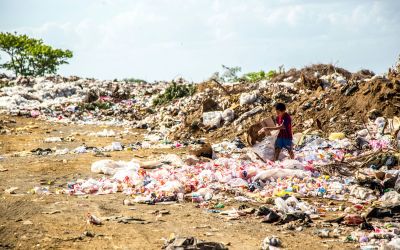
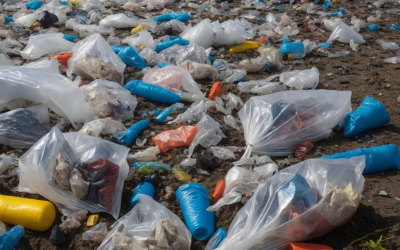
Plastic waste including old CDs, packaging and LEGO can be converted into materials used to capture moisture from the air. Researchers from the University of Vienna have converted the materials into polymer networks that uptake water even in dry climates and release it under moderate heating such as from sunlight.
_400_250_c1.png)
The increasing use of Artificial Intelligence (AI) is an extreme challenge facing climate change mitigation. While AI has the potential to support climate solutions, from improving energy efficiency to monitoring environmental changes, its rapid expansion also comes with significant environmental costs. At New York Climate Week, the President of COP31, Murat Kurum, promised that “climate responsibility” would be a priority at the conference, and that transitioning tech companies to power data centres with clean energy would be a key outcome.
_400_250_c1.png)
El Niño is continuing to strengthen ahead of its peak in December, with scientists describing it as “unprecedented.” Combined with global warming, 2027 is expected to be one of the hottest years on record. With COP31 just around the corner, it is critical that strategies for adaptation to increasing global temperatures are determined.
El Niño is continuing to strengthen ahead of its peak in December, with scientists describing it as “unprecedented.” Combined with global warming, 2027 is expected to be one of the hottest years on record. With COP31 just around the corner, it is critical that strategies for adaptation to increasing global temperatures are determined.
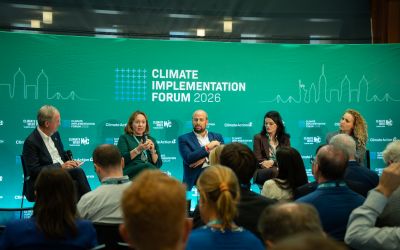
Climate Week NYC is behind us, and three events brought together more than 2,000 delegates to turn climate ambition into action. With six weeks to go until COP31, the conversation continues at the Climate Action Innovation Zone in Antalya.
Climate Week NYC is behind us, and three events brought together more than 2,000 delegates to turn climate ambition into action. With six weeks to go until COP31, the conversation continues at the Climate Action Innovation Zone in Antalya.
_400_250_c1.png)
A new study in mice adds to the health case for tackling plastic, just 6 weeks before world leaders gather for COP31 in Antalya, with a summit day dedicated to zero waste.
A new study in mice adds to the health case for tackling plastic, just 6 weeks before world leaders gather for COP31 in Antalya, with a summit day dedicated to zero waste.
Researchers in Japan say a low-cost catalyst could make carbon recycling more practical, as COP31 turns its attention to clean technology and implementation.
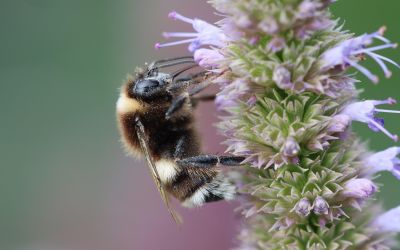
Biodiversity loss has many drivers - overexploitation, pollution, invasive species, and climate change among them. But determining how much of the loss is from climate change alone has proven difficult. A new study by Belgian researchers, coordinated by the Spatial Epidemiology Lab and involving six universities, set out to quantify this for one of Europe's most important pollinator groups: bumblebees.

Excess nitrogen is detrimental to the health of aquatic habitats and humans. A recent study has revealed that along a quarter of our planet’s coastal waterways, humans alone contribute more nitrogen than all natural sources combined.
Excess nitrogen is detrimental to the health of aquatic habitats and humans. A recent study has revealed that along a quarter of our planet’s coastal waterways, humans alone contribute more nitrogen than all natural sources combined.

Former UNFCCC Executive Secretary, Ambassador Patricia Espinosa and UK Energy Minister responsible for signing the UK's net zero commitment into law, becoming the first G7 country to do so, have teamed up to launch a new report calling for a net benefit AI commitment to highlight how AI can reduce emissions more than it is currently producing.

More than 3,250 leaders from business, policy, finance and civil society gathered at London’s historic Guildhall to accelerate practical climate solutions, mobilise investment and build the partnerships required to deliver change at scale.
Businesses around the world continue to view sustainability as a source of long-term growth and resilience, but many are warning that inconsistent climate policy could make the transition to a low-carbon economy more costly and disruptive.