From ambition to implementation: Climate Innovation Forum 2026 set the pace for LCAW
More than 3,250 leaders from business, policy, finance and civil society gathered at London’s historic Guildhall to accelerate practical climate solutions, mobilise investment and build the partnerships required to deliver change at scale.
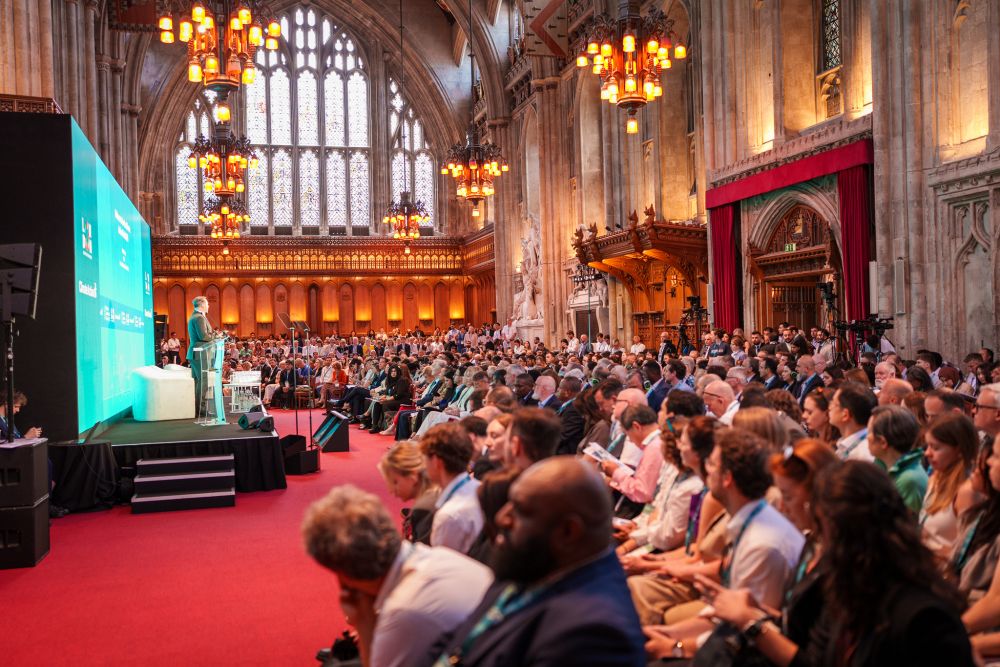
More than 3,250 leaders from business, policy, finance and civil society gathered at London’s historic Guildhall to accelerate practical climate solutions, mobilise investment and build the partnerships required to deliver change at scale.
As London experienced another period of intense summer heat, the urgency of the climate crisis formed an unmistakable backdrop to the Climate Innovation Forum 2026.
The message running throughout the day was clear: climate leadership must now be measured not by the ambition of commitments, but by the speed and scale of their implementation.
“Climate leadership must now be measured not by the ambition of commitments, but by the speed and scale of their implementation.”
From the opening ceremony and launch of the COP31 Action Agenda to a closing address from former US Vice President Al Gore, the Forum combined high-level diplomacy with practical discussions spanning finance, nature, circularity, resilience, artificial intelligence and the energy transition. Across its stages, roundtables, partner events and networking functions, delegates examined how proven solutions can move beyond pilots and pledges to become part of the global economic mainstream.
Climate action as resilience, security and economic strategy
On the Main Stage, speakers repeatedly challenged the idea that climate action should be treated as a separate environmental concern. Instead, it was presented as an essential component of national security, economic competitiveness, infrastructure planning and long-term resilience.
Murat Kurum, COP31 President-Designate and Minister of Environment, Urbanisation, and Climate Change of the Republic of Türkiye, reiterated a call for governments and businesses to accelerate the electrification of the global economy, reduce waste, and deliver on climate finance commitments to reach the targets of the Paris Agreement.
This included the COP31 Presidency’s recently proposed global “35x35” target, aimed at accelerating the electrification of sectors such as transportation, buildings, and industry. Mr Kurum stated that electrification must become a central pillar of the global response to both climate change and the energy affordability crisis.
Murat Kurum said: "Here in London, we want to widen participation to include more businesses, institutions, NGOs, and charities, and by the end of the week, we want to have secured more support for our objectives and targets. This is needed so that everyone comes to COP31 in Antalya prepared and ready to make the global summit a success.”
Rachel Kyte, the UK Special Representative for Climate, warned that intensifying climate impacts require governments, businesses and financial markets to rethink how they assess risk and value resilience. Investment in infrastructure, nature and communities, she argued, must be recognised as a source of economic strength rather than an additional cost.
Katie White, the UK Minister for Climate, similarly positioned the clean energy transition as a defence against geopolitical instability, volatile fossil fuel markets and resource insecurity. Electrify Britain CEO Camilla Born brought this argument into everyday economic terms, calling for faster electrification of transport, heating and industry to reduce bills, strengthen domestic energy security and improve competitiveness.
Al Gore, former Vice President of the United States and Nobel Peace Prize Winner, urged leaders to move beyond passive ESG measurement and concentrate on the indicators that demonstrate genuine physical progress, including the real-time reduction and eventual phase-out of fossil fuels. His address reinforced a central theme of the Forum: disclosure and targets remain important, but they must be connected to measurable outcomes.
“The solutions already exist. We must tune out those who seek to gain from our continued inaction and mobilise the positive driving forces in the UK, across Europe, and around the world.”
- Al Gore, Closing Address, Climate Innovation Forum 2026.
For Selwin Hart, UN Assistant Secretary-General, one of the greatest barriers is not a shortage of climate technologies, but the failure of current financial systems to direct and de-risk investment effectively. Solutions exist, yet capital is still not reaching the countries and communities where it could have the greatest impact.
Ahead of the next phase of international climate negotiations, André Corrêa do Lago emphasised that treaties and diplomatic processes cannot operate in isolation. Climate commitments must be connected to finance, local governance and global supply chains if they are to translate into investable, deliverable projects.
The Main Stage was well-attended throughout the day, and we thank our headline partner, Bloomberg and Bloomberg Philanthropies, for their valued support.
Turning finance into a real-world transition
That implementation challenge sat at the heart of the Finance Stage, hosted in partnership with UNEP Finance Initiative.
The programme opened with perspectives from Mindy Lubber of Ceres and David Russell of the Transition Pathway Initiative, who examined the forces shaping institutional investor strategies on both sides of the Atlantic.
Subsequent discussions focused on accelerating investment into clean energy systems, mobilising sustainable finance in emerging markets and improving the financial sector’s understanding of physical and transition risks.
Trevor Manuel, Chair of the Africa Expert Panel and former Finance Minister of South Africa, warned against approaching today’s challenges as though the assumptions of the post-war economic order still applied. His intervention underlined the need to redesign climate finance for a period of profound geopolitical and economic disruption.
The stage also explored the role of country platforms in coordinating public and private capital. Rather than viewing climate risk solely through the lens of portfolio exposure, speakers called on financial institutions to consider how their decisions could support the transition of the wider economy.
As Mirko Cardinale, Head of Investment Strategy at USS Investment Management, observed, the task is not simply to manage carbon exposure, but to determine “how to best support the system overall”.
Nature moves from externality to strategic asset
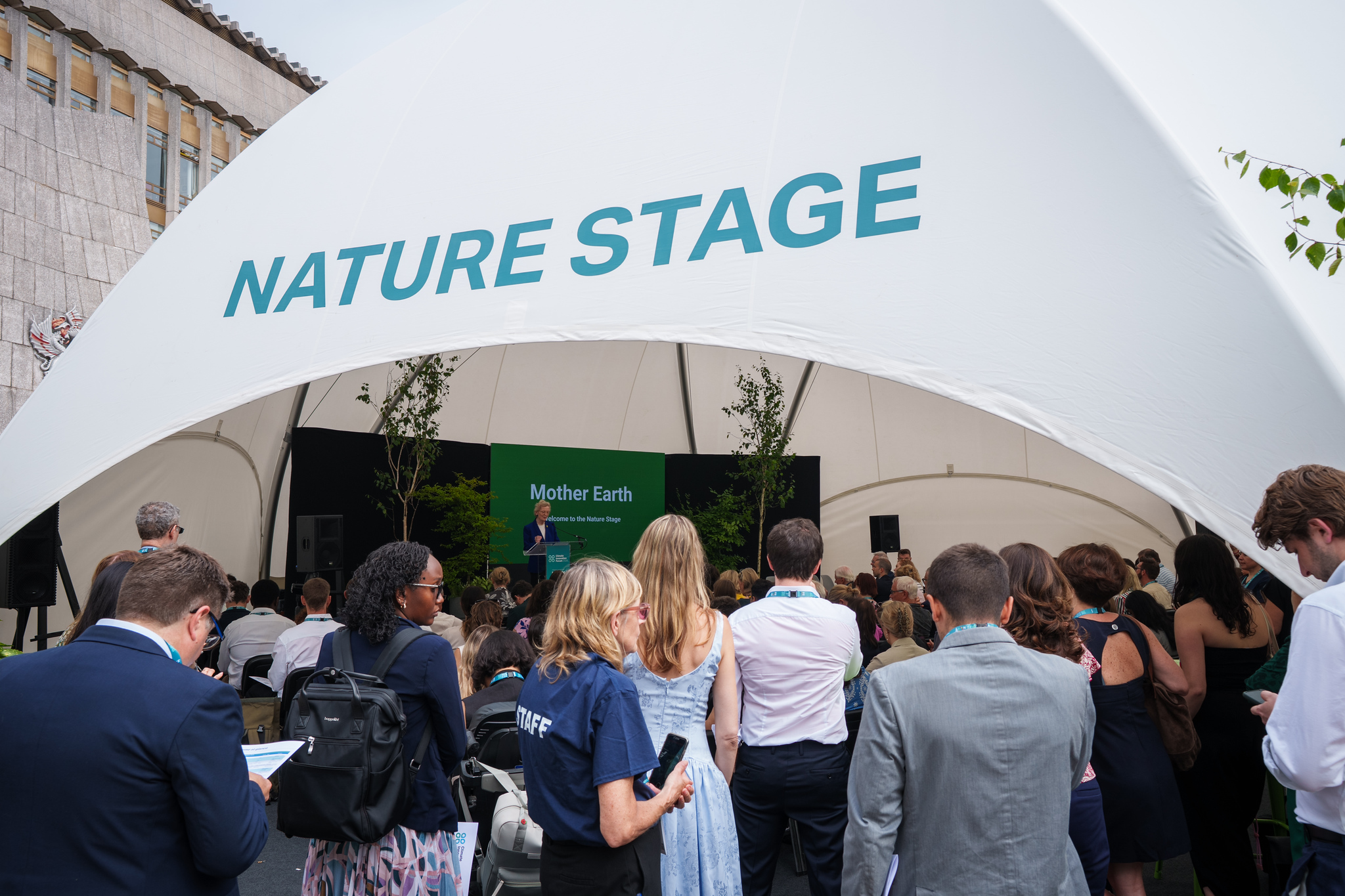
On the Nature Stage, the conversation began from a different premise: nature should no longer be treated as an externality or a secondary climate issue. It is essential infrastructure supporting food production, water systems, coastal protection, economic resilience and long-term value creation.
An immersive opening intervention, in which global Elder, Mary Robinson, spoke from the perspective of “Mother Earth”, grounded the programme in the relationship between land, ocean and human prosperity. Sir Andrew Steer of the London School of Economics then challenged conventional economic models and called for systemic changes that properly recognise nature’s value.
Throughout the day, speakers demonstrated how nature-based solutions are already delivering practical and commercial benefits. Representatives from the Environmental Defense Fund, World Resources Institute and Lestari discussed approaches that strengthen food systems, improve water security and protect coastlines while generating economic returns.
A conversation with Nestlé provided a corporate perspective on the transition, showing how regenerative agriculture can be integrated into business strategy to improve supply-chain resilience and support farming communities.
The focus then shifted towards scale. Leaders from HSBC, GSK, the Taskforce on Nature-related Financial Disclosures and Global Canopy explored how clearer market signals, better data and stronger capital-allocation frameworks could unlock significantly greater investment in nature-positive activity.
Further sessions examined blue-economy financing, nature-risk data and the development of carbon and biodiversity credit markets. Speakers stressed that these markets will only succeed if credibility, transparency and environmental integrity are protected.
Contributions from Morgan Stanley, PepsiCo and Procter & Gamble demonstrated that nature is increasingly being incorporated into procurement, sourcing and supply-chain planning - not simply as a sustainability commitment, but as a means of protecting business continuity and long-term value.
Circularity becomes an economic and climate imperative
The Circularity and Zero Waste Stage explored another major source of untapped climate action: redesigning how materials, products and food are produced, used and recovered.
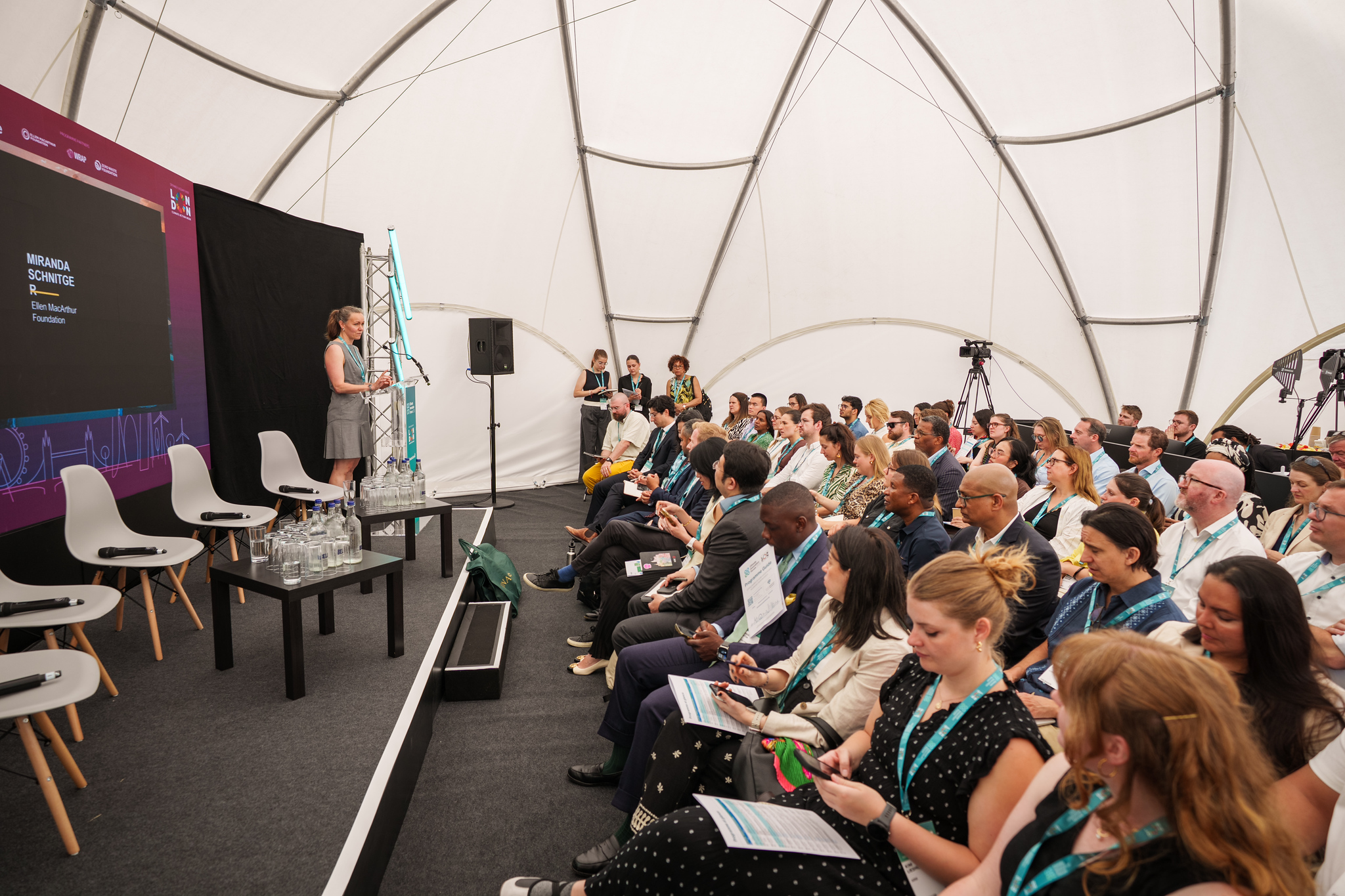
The Ellen MacArthur Foundation opened the programme by highlighting the role circularity can play in addressing the emissions associated with industry, materials, products and food. Discussions then turned to the critical minerals required for the energy and digital transitions.
Speakers from CATL, the International Energy Agency, SAP and Octopus Energy considered how circular approaches could reduce environmental pressures, increase resource security and create new economic opportunities. Innovation showcases provided evidence that these models are already moving into commercial deployment.
WRAP and Tesco led wider conversations on circularity as a driver of growth, resilience and competitive advantage. Food waste emerged as one of the clearest near-term opportunities, with action capable of reducing emissions while lowering costs, improving food security and easing pressure on nature.
As the programme looked towards COP31, ministerial representatives and international organisations called for faster progress on food waste and methane. The Zero Waste Foundation led discussions on the next frontier: moving from successful pilots to system-wide adoption.
Panels on reuse highlighted the need for investable business models, supportive urban infrastructure and more consistent policy signals. A dedicated examination of waste-sector methane also exposed the scale of the opportunity - and the limited amount of climate finance currently directed towards it.
The conclusion was unequivocal. Circular and zero-waste systems are no longer theoretical concepts. The priority is execution: aligning policy, mobilising capital and building the infrastructure needed to deploy them at scale.
Can artificial intelligence become a net climate solution?
The AI Solutions Showcase confronted one of the most rapidly evolving questions in the climate debate: can artificial intelligence accelerate decarbonisation while keeping its own environmental footprint under control?
Following the launch of Climate Action Coalition’s AI report, speakers from the technology, energy, policy and climate communities examined the conditions required for AI to become a net enabler of climate action.
The programme moved quickly from potential to practical application. Case studies showed how AI is being used to improve energy efficiency, optimise infrastructure, support cleaner energy systems, strengthen asset tracking and enhance climate modelling.
Josh Parker, Head of Sustainability at NVIDIA, called for the conversation to move beyond the hype surrounding artificial intelligence and concentrate on applications that produce tangible operational and environmental benefits.
However, participants also identified barriers to wider adoption, including access to data, interoperability, finance, policy uncertainty and the absence of consistent methods for measuring AI’s climate impact.
The final sessions addressed AI’s own growing demand for electricity. More efficient models, better data-centre optimisation, greater transparency and increased use of clean energy will all be needed to ensure that the expansion of AI does not undermine its potential contribution to the transition.
The resulting message was balanced but optimistic: AI can become a powerful climate tool, but only if technological growth is matched by strong governance, common standards and clear accountability for energy use and emissions.
Delivery will depend on coalitions
The Forum closed with a reminder that implementation does not rest with national governments alone.
Gina McCarthy, Chair of America Is All In and former White House National Climate Advisor, delivered a rallying call for cities, states, businesses and regional coalitions to continue deploying clean energy and developing creative financing partnerships, even when progress at the federal level becomes constrained.
Her message reflected the wider spirit of the day. Climate action is increasingly being driven by coalitions that cut across sectors, borders and levels of government.
The Climate Innovation Forum demonstrated that the technologies, business models and policy ideas required for progress exist; the challenge is to connect them with the finance, infrastructure and partnerships necessary to achieve scale.
“The technologies, business models and policy ideas required for progress exist; the challenge is connecting them with the finance, infrastructure and partnerships needed to achieve scale.”
As London Climate Action Week began, the emphasis had shifted decisively from what the world intends to do to how it will be delivered. 30+ invitational partner events and roundtables also took place throughout the day, with 17 key product launches and announcements, including Arc’s ResilienceArc, a first‑of‑its‑kind open platform designed to help financial decision makers assess corporate resilience to physical climate risks through a consistent, transparent framework, and the The Nature Conservancy’s launch of “Gaining Ground: The State of Private Investment in Nature, 2026 in collaboration with Forest Trends” - the most comprehensive global analysis to date of private, return-seeking capital flowing into nature.
The day concluded with the London Climate Action Week Gala Dinner, bringing together 380 global climate leaders for an evening of networking and celebration. The evening was a fitting close to a day defined by urgency, collaboration and a renewed determination to turn ambition into action.
All sessions from the Climate Innovation Forum are now available on-demand.
To partner or get involved in next year’s 2027 event, register your interest here.


_400_250_s_c1.png)