Yann Wyss on Strengthening Resilience in a Fragmented World
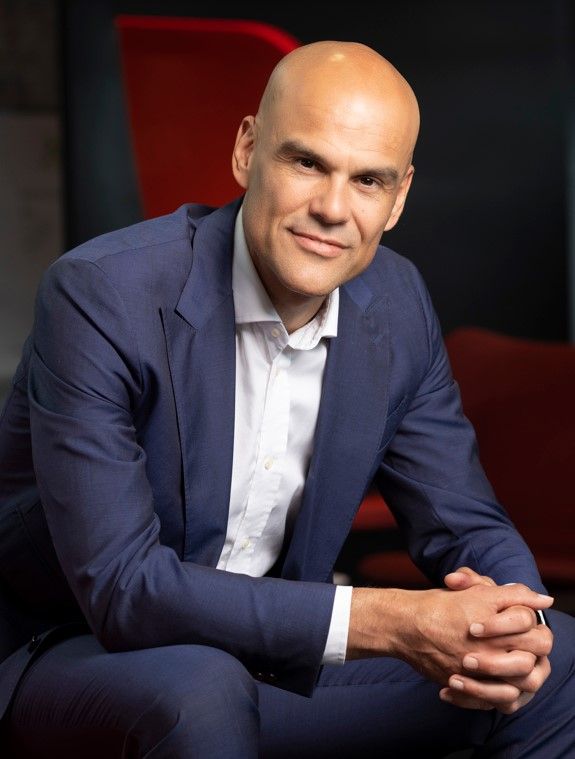
A conversation with Yann Wyss, Global Head of Public Affairs, Nestlé, at the Climate Innovation Forum during London Climate Action Week 2026
How has a more fragmented world changed the sustainability conversation?
We are living through a reality check.
Across business, government and civil society, stakeholders are navigating a world shaped by geopolitical tensions, trade disruptions, economic uncertainty and climate impacts. As fragmentation increases, trust becomes harder to build and easier to lose.
The result is a fundamental shift in expectations.
Policymakers, investors, NGOs and consumers are no longer looking for sustainability pledges alone. They want evidence that sustainability is delivering real outcomes for people, nature and business.
At Nestlé, this has reinforced our belief that sustainability cannot be treated as a parallel agenda. It must be integrated into the business itself. We increasingly frame sustainability through three business value drivers:
- Ensuring supply by strengthening the resilience of agricultural value chains.
- Driving efficiency through solutions that deliver measurable impact.
- Generating growth by building consumer trust and long-term brand value.
Sustainability has never been more strategic because it makes our business, nature and people more resilient all along our value chain from farmers to consumers.
What does resilience actually look like on the ground?
Resilience starts with farmers.
Recent disruptions to global fertilizer markets highlighted how vulnerable agricultural systems can be when they depend heavily on external inputs and fragile supply chains. For farmers, these challenges are not theoretical. They directly affect productivity, profitability and long-term viability.
This is where regenerative agriculture is proving its value.
Across our key agricultural supply chains, we are seeing measurable results.
In dairy, Nestlé has achieved a 26% net reduction in greenhouse gas emissions compared to 2018 levels.
In coffee, 53% of Nestlé's green coffee is now sourced from farmers adopting regenerative agriculture practices, already exceeding the company's 2030 target.
In cocoa, Nestlé's Income Accelerator Program now reaches around 45,000 farming families, helping improve incomes, strengthen savings and increase resilience in the face of climate and market volatility.
These examples demonstrate that sustainability can help farmers reduce risk, strengthen livelihoods and build more resilient production systems while supporting business performance.
Why is stakeholder engagement becoming more important in this environment?
The role of partnerships and collaboration has evolved significantly.
Today, it is less about communicating commitments and more about building credibility and trust.
Our responsibility is twofold.
First, we must ensure that our actions are grounded in evidence and deliver tangible outcomes. Credibility is earned through results and transparency.
Second, we must bring those results into the conversations that shape policy, partnerships and collective action.
This is particularly important because the sustainability community cannot operate in a bubble. If we want meaningful progress, we must engage not only with those already convinced, but also with those who may be skeptical or disconnected from the conversation.
Trust is becoming one of the world's most valuable and scarce resources. Rebuilding it requires openness, collaboration and a clear demonstration of impact.
How do we move from individual success stories to system-wide change?
No company can build resilience alone.
The challenges facing food systems, climate and nature require collaboration across businesses, governments, farmers and civil society organizations.
That is why partnerships are so critical.
Nestlé works with organizations including the World Farmers Organisation, The Nature Conservancy and Goodwall, while also collaborating with industry peers through initiatives such as the TogetherCocoa Foundation.
The objective is simple: take what works and help scale it.
The biggest obstacle to system change is often not technology, finance or expertise. It is trust. Trust between stakeholders with different priorities but shared challenges.
The most resilient thing we can do in a fragmented world is refuse to work in silos.
When credible proof points are combined with strong partnerships and shared ambition, individual projects can become systemic solutions. That is how resilience is built, not only for companies, but for farmers, communities, consumers and the food systems we all depend on.