Huhne confirms carbon budget
After disagreement within government which threatened the announcement, Chris Huhne, Energy and Climate Change Secretary, has laid out his plans for the UK’s Carbon Budget to 2027, accepting the Committee on Climate Change’s proposals. However, with a review in 2014, to look at the UK’s position against EU competition, some have argued the budget has a get out clause for business.

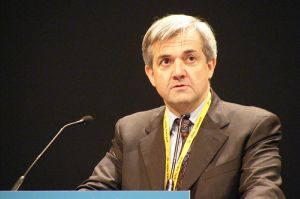 After disagreements within government which threatened the announcement, Chris Huhne, Energy and Climate Change Secretary, has laid out his plans for the UK’s Carbon Budget to 2027.
This is the first commitment to take a country past 2020. The policy, set up by the government’s advisory body the Committee on Climate Change (CCC), will change the way Britain produces energy.
Speaking in the Commons Huhne said: “By agreeing to the Committee on Climate Change’s proposed level, we are demonstrating our desire to drive the changes needed to turn the UK into a dynamic, low carbon economy that is attractive to investors in the new and growing low carbon sectors. We are also sending a clear signal to the international community: that the UK is committed to the low carbon economy.”
The recommendations from the CCC, and accepted by the government will see emission reduced by 50 per cent based on 1990 levels by 2025, heading towards the overall goal of a 60 per cent reduction by 2030.
The Committee says this will be needed if the UK to reach their legally binding global commitments of 80 per cent reductions by 2050.
While the CCC proposed that the bulk of budget should come from emissions reduction at home, and not through trading, while Huhne said this would happen as far as possible, the government would also be keeping carbon trading options open to maintain maximum flexibility and minimise costs in the medium and long term.
However, the plans have faced criticism from consumer groups, as they will create an average rise in energy bills by £1 per week by 2020. Roger Harrabin, environmental analyst for the BBC, told yesterday’s Radio 4 Today programme that the government has not done enough to smooth over confusing regarding the plan.
He said: “The committee says that after 2020 energy prices should more or less plateau and it assumes that by the 2020s the UK will actually be reaping the benefits of having a secure supply of energy.
“It feels that behind the scenes the politicians haven’t made the case strongly enough to the public that prices of energy are going to go up anyway, whatever sort of energy we are going to use.”
Speaking yesterday Huhne tried to reassure critics that the proposals will not affect customer prices over the current parliamentary period.
Yesterday’s announcement was clouded by controversy after a leaked letter over the weekend (14 May). The leaks exposed a row between Huhne and Business Secretary Vince Cable, who said the targets were too ambitious and would be too costly for the current UK economy.
Reports suggest that the Prime Minister had to step in after coalitions of environmental groups urged him to “ramp up the efforts” and keep to his pledged for the coalition government to be the “greenest government ever”.
Labour leader Ed Miliband also spoke out for the proposed CCC budget, saying that failing to agree would be a terrible signal to business and the rest of the world.
However, the new agreement is said to contain a get out clause. Come 2014, if the energy intensive companies argue to be the only companies in Europe who face extra taxes on energy, then the whole proposal will be revised.
Energy intensive companies which face worldwide competitive pressure are also likely to be given some form of tax break, free allocations of unit under the EU ETS or financial incentives for environmental business practices such as moving towards using biomass and biofuels, to soften the blow of these new proposals.
Huhne said: “We will undertake a review of progress in early 2014 to ensure that our carbon targets are in line with those of the European Union. We are working at a package of measure, to be announced by the end of the year, to help energy intensive industries adjust to the low-carbon industrial transformation while remaining competitive.”
He said it was important that UK energy-intensive industries remain competitive, sending a clear signal that the UK is open for business. He described the target of reducing emissions by 1,950 million tonnes of CO2 proposed for the 2023 to 2027 period as “ambitious but achievable”
He said: “By providing long-term clarity for investors, the fourth carbon budget places the UK at the leading edge of the global low-carbon industrial transformation. It is a framework not just for action on climate but for growth and prosperity.”
Image: David Spender | flickr