CIF 2026 interview with Shaun Carazzo, Global EY Financial Services Sustainability Leader
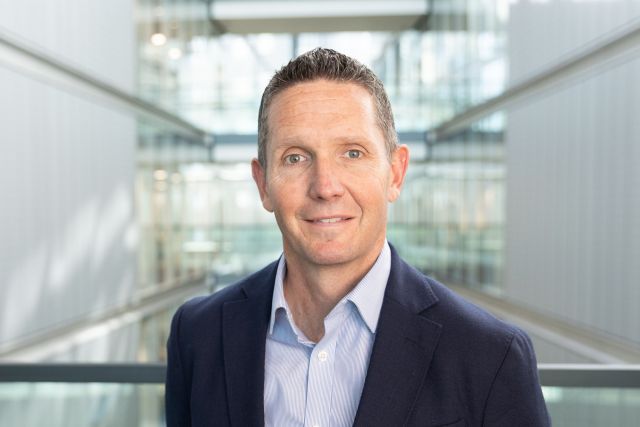
Shaun Carazzo, Global EY Financial Services Sustainability Leader, spoke to Climate Action following the Climate Innovation Forum during London Climate Action Week. He shared reflections on the key themes shaping the sustainability agenda, from carbon markets and AI to transition finance, resilience and nature. He also discussed how the firm is supporting clients to translate sustainability ambitions into tangible measurable outcomes.
What were the defining moments of London Climate Action Week for you, and what do they reveal about the direction of the sustainability agenda?
What stood out most was the strong sense of momentum and collaboration across the climate and sustainability ecosystem. Leaders from business, finance, government and civil society came together with a clear focus on how to translate ambition into action. Across discussions on climate innovation, transition finance, nature, carbon markets and long-term value creation, the emphasis was on execution, scaling solutions and delivering measurable impact.
A particular highlight was the carbon market policy forum hosted by EY at the Climate Innovation Forum, where senior policymakers and market participants explored how carbon markets can help mobilise private capital at the scale needed to support climate solutions. Conversations repeatedly returned to the importance of trust, transparency, policy certainty and effective market frameworks to unlock private finance at scale.
The week also highlighted the increasing role of technology, particularly AI, in helping organisations manage growing sustainability reporting requirements, improve decision-making, and drive efficiency. At the same time, many discussions explored whether innovation, policy and capital are moving quickly enough to support the pace of the transition.
More broadly, London Climate Action Week reinforced a clear shift in the sustainability agenda. The conversation is no longer centred on setting ambitions; it is now focused on implementation, resilience and value creation. Across climate, nature, finance and technology, there was a shared recognition that collaboration and practical solutions will be critical to delivering impact at scale.
As the sustainability agenda evolves, where are clients focusing their efforts, and how is EY positioning itself to help clients navigate this increasingly complex agenda?
The client conversation has shifted beyond reporting and compliance to execution, resilience and value creation. Organisations are focused on accelerating decarbonisation, managing climate and nature-related risks, embedding sustainability into decision-making, and unlocking capital for transition opportunities. The challenge is no longer about ambition but delivering measurable outcomes that create long-term business value.
EY is supporting clients to navigate this complexity by bringing together capabilities across sustainability reporting, risk, decarbonisation, sustainable finance, carbon markets and nature. Combining deep sector knowledge with leading technology, data and analytics, we help organisations move from compliance to transformation, turning sustainability challenges into strategic opportunities.
We believe the transition to a more sustainable economy is one of the defining business opportunities of our time, creating new sources of growth, resilience and value. Sustainability therefore remains a core pillar of the firm’s growth strategy and is reflected in our own commitments.
Launched in 2024, the EY Global Environment Strategy sets out the firm’s approach to managing its climate impact, accelerating progress towards net zero while broadening its focus to include nature, biodiversity, water, waste and pollution. Since 2019, the firm has reduced its absolute greenhouse gas emissions by 40% while growing revenue by 41% and expanding its workforce by 36%. The firm remains committed to halving emissions by 2030 and achieving net zero by 2050.
This leadership is reflected in EY being named a leader in the Verdantix Green Quadrant: Sustainability Consulting 2026, recognising our innovation, sector knowledge and ability to support sustainability transformation from strategy through execution.
The EY’s New Economy Unit (NEU) recently published a report “From extractivism to regeneration: Unlocking the transformation”. What are the key takeaways for businesses?
One of the most compelling messages from the report is that many of today's environmental, social and economic challenges are not isolated issues but symptoms of a broader economic model that often prioritises short-term financial returns over long-term value creation.
The report argues that simply bolting sustainability onto existing systems is unlikely to deliver the scale of change required. Instead, businesses have an opportunity to play a leading role in the transition towards a more regenerative economy, creating value for shareholders while also supporting people, communities and the natural environment.
What is particularly powerful is that the report but also diagnose the problem, it explores practical pathways forward. Through the work of the NEU, the firm is bringing together business leaders, academics and policymakers to examine how resilience, systems thinking, circularity and long-term value creation can be embedded into strategy, investment decisions and operating models.
At a time of increasing geopolitical, environmental and technological disruption, the report makes a compelling business case for regenerative approaches. Organisations that successfully integrate these principles will be better positioned to manage risk, unlock innovation, strengthen resilience and create sustainable competitive advantage over the long term.