Accelerating Global Forest Restoration After COP30: Jad Daley, President of Terraformation
As the world reflects on the outcomes of COP30 in Belém, one message has risen to the top of the global conversation. Forests are essential for climate stability, biodiversity, and community resilience. The conference marked a period of alignment and urgency, and the post-COP30 landscape is now focused on translating that momentum into rapid implementation.
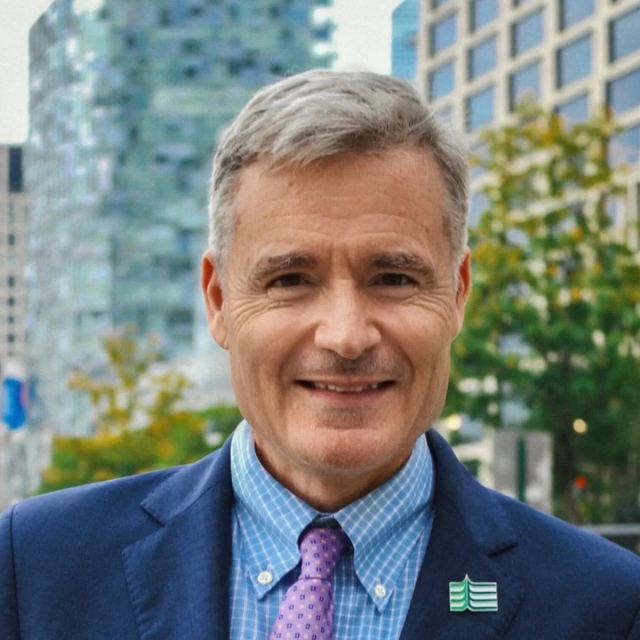
Terraformation, now in its fifth year, has entered this next chapter with major commitments, including 20,000 hectares of new community-led reforestation in Africa and the launch of a new nonprofit arm to build global restoration capacity. ClimateAction.org spoke with Jad Daley, Terraformation’s President and a TIME100 Climate honoree, about what comes next.
What did COP30 reveal about the global state of forest restoration?
COP30 made it clear that forests must rise to the top of the climate agenda. New UNEP data showed that the world needs to triple investments in forests by 2030 in order to stabilize the climate and reverse biodiversity loss. The level of agreement around the urgency of forest restoration was remarkable. For Terraformation, it reinforced the importance of accelerating native forest restoration and expanding global capacity for communities that are ready to lead.
Terraformation committed to helping triple native reforestation globally by the end of this decade. What does implementation look like now that COP30 has concluded?
Our focus is speed, integrity, and partnership. We are scaling systems that support full lifecycle restoration, including seed collection, seedling production, survivability tracking, and geospatial monitoring. These systems allow local teams to increase the pace of restoration while meeting high scientific and ecological standards.
We continue to prioritize work in regions that need it most and to deepen partnerships with Indigenous peoples and local communities. Community leadership is essential for long term success of reforestation projects. In Ghana, for example, our mangrove restoration project is employing 90% women while also building disaster resilience for local communities, showing how adaptation and development can happen together with ecosystem restoration.
One of Terraformation’s biggest announcements at COP30 was 20,000 hectares of new commitments across Africa. Can you share more about these projects?
Yes. These commitments reflect the type of landscape-scale restoration the world needs.
- 14,000 hectares in Cameroon, restoring part of the Congo Basin rainforest, which is the second largest rainforest on Earth.
- 6,000 hectares in Ghana, restoring critical mangrove ecosystems in a Ramsar Wetlands biodiversity hotspot.
Both carbon projects were shaped collaboratively with local communities. The next phase is to scale on-the-ground activation by continuing nursery production and initial plantings, finalizing plans for remaining areas, training local teams, and mobilizing the financing needed for full rollout. Implementation will prioritize practices that strengthen ecosystem health, support local livelihoods, and build long-term ecological and economic resilience.
While these projects represent early work in Africa, Terraformation is also advancing additional restoration projects across APAC and Latin America as part of its broader global portfolio. Across all regions, Terraformation designs projects that deliver tangible benefits for local communities and align with the goals of government partners. Restored forests improve air quality, enrich soil, regulate water, cool local microclimates, and create employment—ensuring that the work supports both the landscape and the people who depend on it.
Terraformation often emphasizes building global capacity. What does that look like moving forward?
Scaling restoration is not only about planting more trees. It’s about enabling the entire sector to succeed. We focus on four areas:
- Shaping the global narrative so that native forest restoration is understood as a climate and community development opportunity.
- Developing open source forestry tools like Terraware that support plant data integrity and operational reliability.
- Providing landscape-scale transparency and tracking from seed collection to thriving forest.
- Offering technical assistance and training so that restoration practitioners can access the knowledge and support they need.
These pillars strengthen infrastructure across the global restoration movement.
Terraformation recently launched a new nonprofit arm. How will this shape progress after COP30?
The nonprofit arm will accelerate innovation and increase access to high quality restoration resources. It will incubate open-source tools, provide additional support to under-resourced partners, and build a comprehensive global training program. This creates opportunities to leverage philanthropic and public funding in order to expand capacity in regions where it’s needed most.
Terraformation also offers a tree subscription. How does this fit into your larger strategy to scale restoration after COP30?
The tree subscription is a direct way for individuals to participate in high integrity reforestation by planting at least one tree a month. Subscribers help fund the cultivation of native seedlings that are planted and monitored as they grow into biodiverse forests. It’s a simple entry point for people who want to contribute meaningfully to climate goals without diving into carbon offsets.
For the post-COP30 period, the tree subscription is an important avenue for sustaining momentum and connecting the public to global environmental progress. We’ve learned that people don’t just want to hear about climate solutions—they want to take part in them. Our tree subscription lets anyone tap into Terraformation’s expertise right from their phone.
You joined Terraformation as President this year. What is your focus as the organization enters this next stage?
My focus is partnership, investment, and implementation. I’m working closely with our CEO, Yishan Wong, and our global forestry and carbon teams to build the alliances needed to expand restoration efforts. Our mission remains straightforward and urgent. We aim to help reforest the world the right way.
What is your message to climate leaders as the world moves beyond COP30?
The momentum coming out of COP30 is real, but it needs to be sustained. Forest restoration is effective, scalable, and community focused. The time for large-scale investment is now. If we act this decade, we can change the trajectory of climate and biodiversity outcomes, all while boosting economic resilience for the generational stewards of these critical ecosystems.
Looking Ahead
Terraformation is already activating the commitments announced at COP30. The organization is preparing for implementation of high-quality carbon projects around the world, expanding reforestation training programs, scaling open-source restoration tools, planning for its new nonprofit arm, and continuing to develop its subscription program to enable public support for forests. Together, these efforts reflect Terraformation’s comprehensive suite of native forest solutions designed to accelerate and strengthen the global restoration movement.
How to Engage
For organizations and individuals who want to support Terraformation’s work, learn more on their website.
The tree subscription program is available for anyone seeking a direct way to contribute to long term forest restoration and community impact at terraformation.com/plant.