Biden Bans New Offshore Drilling for Oil and Gas Along Majority of US Coastline
Two weeks before the end of his Presidential term, Joe Biden has taken action to protect over 625 million acres of the US’ ocean from future oil and natural gas leasing.
While 2024 fell short in delivering the level of commitment and action needed to address the triple planetary crisis of climate change, biodiversity loss, and pollution, important steps forward were taken, setting the precedent as we enter the critical five-year stretch towards 2030.
New IEA report finds that strong deployment of renewables is set to curb growth in coal use even as electricity demand surges, with China – the world’s biggest coal consumer – remaining pivotal.
Intergovernmental Platform on Biodiversity and Ecosystem Services (IPBES) transformative report estimates $10tn business opportunity value that could be generated from acting immediately to halt biodiversity loss, whilst supporting 395 million jobs globally by 2030.
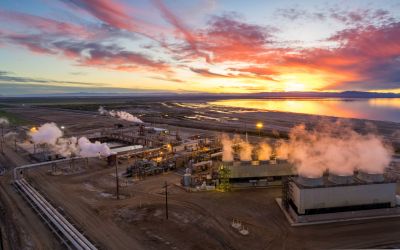
Largely untapped underground energy source can help meet world’s rapidly growing demand for electricity, but cost reductions are needed to drive new generation of projects.
The last two months have seen a trio of UN COP Summits take place, with United Nations Convention to Combat Desertification (UNCCD) COP16 concluding on Saturday.
UK Energy Secretary Ed Miliband today (Friday 13 December) set out a detailed plan for achieving the target of clean power by 2030.
The sixteenth session of the Conference of the Parties (COP16) of the United Nations Convention to Combat Desertification (UNCCD) is currently taking place in Riyadh, Saudi Arabia. It is a key international event gathering member states, environmental organisations, and stakeholders gather to discuss global efforts to combat desertification, land degradation.
In a 1789 letter, Benjamin Franklin referenced that nothing in this world is said to be certain, “except death and taxes”. As the impact of climate change intensifies – hotter temperatures, rising sea levels and more extreme temperatures that know no border – we are introduced to life’s third certainty, or better yet unavoidable truth. Climate adaptation.
Latest data from Copernicus, the EU’s flagship Earth observation programme, shows November 2024 was the second-warmest November globally, after November 2023.
The Rt Hon Chris Skidmore OBE, Chair of the Climate Action Coalition, reflects on COP29, the COP process and recent data on the public perceptions of the climate threat in the UK and US.
At major IEA conference, decision-makers from tech, energy and government underscore AI’s implications for energy security and transitions.
LIXIL has developed "revia," a circular building material that reuses hard-to-recycle plastic waste by combining it with waste wood. This innovative process allows different materials to be crushed and extruded together without sorting, making it possible to effectively use almost all household and commercial waste plastics. Revia aims to address the issue of plastic waste and reduce CO2 emissions by over 80% compared to burning waste plastics and wood. The material is versatile, boasting a handmade, wood-like texture, and is suitable for various applications, from building materials to everyday products.
A majority (52%) of Britons now say climate change is one of the most, if not the single most, important problems the country faces – up from 46% last year, according to a new survey.
The COP29 Outcomes Forum took place on Wednesday 4 December, hosted by the Climate Action Coalition, the Policy Institute at King’s College London, and DIPLOMAT Magazine.
This year’s UN Climate Change Conference, COP29, concluded in Baku on 24th November. A new climate finance goal was the locus of the two-week agenda, with the New Collective Quantified Goal (NCQG) amounting to $300bn, to be contributed to by developed countries on an annual basis. The NCQG will also scale up finance to developing countries, from public and private sources, with an agreed target of $1.3 trillion per year by 2035. Although this outcome fell short of expectations, efforts must now be accelerated to deliver the NCQG and bridge the climate finance gap.